Water Mitigation vs Water Restoration: What Each Phase Covers
Need help with your own home?
Tell us your concern. We'll check local contractor availability.
No referral fee · No obligation to hire
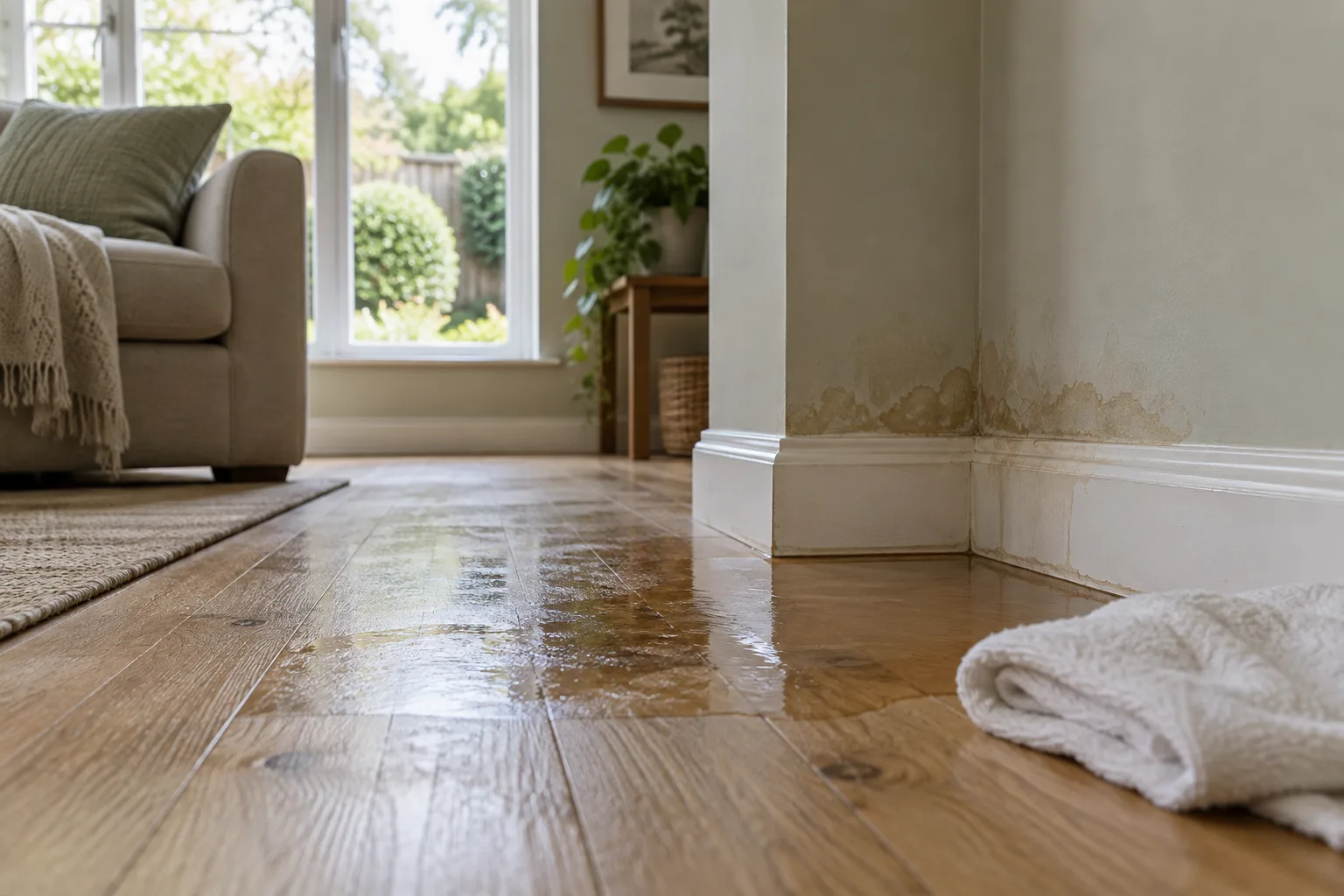
What is the difference between water mitigation and water restoration?
Water mitigation stops the damage: shutting off the source, extracting standing water and drying the structure so nothing gets worse. Water restoration repairs what the water already ruined: replacing drywall, flooring and trim and rebuilding finished spaces. Mitigation comes first and is urgent; restoration follows once the home is verifiably dry.
Homeowners tend to use mitigation, remediation and restoration interchangeably, but the pros who do the work — and the insurers who pay for it — do not. Under the IICRC S500 standard that professional restorers follow, mitigation covers the emergency actions that stop a loss from growing, while restoration covers putting the property back the way it was. Knowing which phase you are in tells you exactly what should be happening in your house right now.
The distinction matters most in the first 24 hours. Mold can begin developing within 24–48 hours of water exposure, so the mitigation clock starts immediately, while full water damage restoration can wait for a written scope and an adjuster's review. A homeowner in Roswell or Dunwoody who calls a restoration company is almost always asking for mitigation first — that is the part that cannot wait.
What is water mitigation and what does it include?
Water mitigation is the emergency phase that prevents further damage. It includes stopping the water source, extracting standing water, removing unsalvageable wet materials, setting air movers and dehumidifiers, and monitoring moisture levels until the structure is dry. The goal is stabilization — protecting the home, not making it look finished again.
Mitigation is reactive and fast. On a typical North Fulton loss — a burst supply line in an Alpharetta two-story, a failed water heater in a Sandy Springs basement — a local contractor we help homeowners request an introduction to shuts down the source, classifies the water as Category 1, Category 2 or Category 3, and starts water extraction before anything else, because every hour standing water sits it wicks deeper into drywall, subfloor and framing.
Drying follows extraction. A contractor places air movers and dehumidifiers sized to the Class 1–4 evaporation load of the affected rooms — the structural drying phase — then proves the structure is dry with moisture meters, moisture mapping and thermal imaging rather than guesswork. For Category 3 losses like sewage backups or rising water, mitigation also includes containment and antimicrobial treatment before any rebuild is even discussed.
- Source control: shutting the supply valve, capping the failed line or tarping the roof so no new water enters.
- Inspection or assessment: a contractor may offer one; confirm methods, scope, fee, and written-estimate terms directly.
- Controlled demolition: unsalvageable wet drywall, insulation, carpet pad and flooring come out so wall cavities can dry.
- Structural drying: air movers and dehumidification run until moisture readings hit dry-standard targets.
- Monitoring and documentation: daily moisture readings and photos that later become your claim documentation.
What does the restoration phase include after the home is dry?
Restoration rebuilds what mitigation removed or what water destroyed: hanging and finishing new drywall, replacing insulation, installing flooring and baseboards, painting, and repairing cabinetry or subfloor. It starts only after moisture readings confirm the structure is dry, and it ends when the room looks the way it did before the loss.
Restoration is construction. Once the drying equipment comes out, that contractor may rebuild what was removed: new drywall hung, taped and painted; insulation replaced; baseboards and trim reinstalled; flooring relaid over a verified-dry subfloor. On larger Johns Creek and Brookhaven losses it can extend to cabinetry, built-ins and whole finished-basement spaces.
Because restoration is scoped after drying, its price varies far more than mitigation's. As a labeled estimate for the Atlanta market, full restoration typically runs $3,000–$30,000+ depending on materials and square footage — actual pricing always depends on the on-site inspection, and inspection fees and written-estimate terms are set by a contractor. The rebuild timeline is its own question; see how long water damage restoration takes for typical North Fulton timelines.
Why do insurers and restoration pros treat mitigation and restoration as separate phases?
Because they answer different questions. Mitigation is the emergency response insurers expect right away — homeowners policies generally include a duty to mitigate further damage. Restoration is the planned repair work that follows, scoped and priced after the structure is dry, when the full extent of the damage is actually known.
Insurers see two different obligations. Most homeowners policies generally expect prompt, reasonable steps to prevent further damage — the duty to mitigate — which is why adjusters rarely object to emergency extraction and drying that begins before they have even seen the loss. Restoration, by contrast, is a planned repair the carrier wants to scope, document and approve before the rebuild starts.
Pros split the phases for a practical reason: you cannot honestly price a rebuild while the walls are still wet. Moisture mapping during mitigation reveals how far water actually traveled — under hardwoods, behind baseboards, into the ceiling below — and that determines the restoration scope. The claims paperwork follows the same split; the Georgia water damage claim process guide walks through it step by step.
One caveat: this page is general information, not legal or insurance advice. Whether a specific loss is covered — sudden-and-accidental pipe bursts usually are, gradual leaks and rising floodwater usually are not, and flood coverage runs separately through the NFIP — is a decision that belongs to your insurer and your policy.
How does billing differ between mitigation and restoration on an insurance claim?
Mitigation is usually billed first, often directly to the insurer, based on equipment days, labor and water category — typically $1,300–$5,500 for extraction and $2,000–$6,000 for structural drying as labeled estimates for the Atlanta market. Restoration is billed from a written repair scope the adjuster approves, frequently weeks later.
Mitigation invoices are built from measurable line items: water removed, days of equipment runtime, labor hours, the water category and the Class 1–4 drying load. A straightforward Category 1 loss in a Dunwoody kitchen might produce a drying invoice near $2,500, while a Category 3 basement in Sandy Springs lands at the high end — both inside the typical Atlanta-market estimate ranges above, and both confirmed only by an on-site inspection and written estimate.
Restoration billing starts with a written scope — often in the same estimate format your adjuster uses — that itemizes drywall, paint, flooring and trim room by room. Your deductible generally applies once to the claim as a whole, and the drying logs, photos and moisture readings from mitigation become the claim documentation and proof of loss that support the restoration payout. Keep every document from both phases.
What does the full sequence look like on a typical North Fulton water damage job?
A typical job runs: emergency call and source shutoff, inspection and moisture mapping, water extraction the same visit, two to five days of structural drying with monitoring, then a repair scope, adjuster approval and the rebuild. Drying usually takes days; the restoration phase can take weeks depending on materials.
Here is how the two phases stack up on a typical North Fulton loss — say a burst pipe in a two-story off GA-400 in Alpharetta, or a basement seepage call near the Chattahoochee River in Roswell. The sequence is the same whether the home sits in Fulton County proper or just over the line in Brookhaven; only the durations stretch with the size of the loss.
The handoff between dry verification and rebuild is where homeowners most often lose time, because restoration cannot be scheduled until dry-standard readings are documented and the adjuster signs off on the scope. Asking a contractor for drying logs as they are generated — not after the fact — keeps the restoration phase from stalling.
- Step 1 — call and stabilize: you call (678) 944-8612, we may introduce you to a local contractor, and the water source gets shut down. Some contractors in this field offer emergency response at any hour, but availability varies and must be confirmed directly.
- Step 2—assessment: a contractor may offer one; confirm methods, scope, fee, and written-estimate terms directly. There is no fee to request the referral; we may receive a referral fee if a contractor accepts an introduction.
- Step 3 — mitigation: extraction the same visit, controlled demolition where needed, then air movers and dehumidifiers running roughly two to five days with daily readings.
- Step 4 — dry verification: moisture meters confirm dry-standard targets before any rebuild begins.
- Step 5 — restoration: scope approval with your adjuster, then drywall, paint, flooring and trim — typically days to weeks depending on materials and lead times.
Where does the inspection fit between mitigation and restoration?
At the very start—before mitigation work begins—request an assessment referral. If a contractor accepts an introduction, that contractor decides whether to inspect, map moisture, identify the water category, or provide a written estimate; confirm any fee directly. Nothing is billed by us for requesting the connection.
Everything above starts with the same first move. North Fulton Water Damage Pros is a referral service, not a contractor—we do not perform mitigation or restoration work. We may introduce you to an available local restoration contractor; that contractor sets inspection fees and written-estimate terms directly, and we may receive a referral fee if a contractor accepts an introduction.
Booking the water damage assessment early — even for a loss you suspect is minor — gets moisture readings on record before damage spreads and gives you a real number instead of a guess. Call (678) 944-8612 any time; homeowners across Sandy Springs, Roswell, Dunwoody, Alpharetta, Johns Creek and Brookhaven use the same line.
Frequently asked questions
Is water mitigation the same as water removal?
No. Water removal — extraction — is one task inside mitigation. Mitigation also covers stopping the source, removing unsalvageable wet materials, structural drying with air movers and dehumidifiers, and documenting moisture readings until the home reaches dry-standard targets. Extraction alone can leave water hidden inside walls and subfloors.
Can one company handle both mitigation and restoration?
Yes, and it usually goes smoother that way, because the drying data flows straight into the repair scope. The contractor; confirm licensing and insurance directly that North Fulton Water Damage Pros refers handles both mitigation and restoration, so you are not coordinating two different contractors in the middle of a claim.
Is mold remediation part of mitigation or restoration?
Neither — it is a separate scope governed by the IICRC S520 standard, using containment, HEPA filtration and negative air pressure. Fast mitigation usually prevents it, since mold can begin developing within 24 to 48 hours. If remediation is needed, typical Atlanta-market estimates run $1,500–$6,000, with the exact figure set by the inspection.
What does a duty to mitigate mean for me as a homeowner?
Most homeowners policies generally require reasonable steps to prevent further damage after a loss — shutting off the water, calling for extraction, starting drying promptly. Waiting can worsen the damage and complicate a claim. This is general information rather than insurance advice; your policy language and your insurer control the specifics.
Does completing mitigation guarantee my insurance claim gets approved?
No. Mitigation protects the house and produces documentation, but coverage turns on the cause of loss — sudden-and-accidental events are generally covered, gradual leaks and rising floodwater generally are not, and flood coverage is separate through the NFIP. The coverage decision always belongs to your insurer and your policy.
Do I really need mitigation for a small leak, or can I just repair it?
Get readings first. Small leaks routinely push moisture into wall cavities and subfloors where it sits unseen, and patching the surface can seal that moisture in. If a contractor accepts an introduction, confirm whether an assessment is offered, what it includes, and any fee. There is no fee to request the referral; we may receive a referral fee if a contractor accepts an introduction.