Water Damage Insurance Claim Process in Georgia: Step by Step
Need help with your own home?
Tell us your concern. We'll check local contractor availability.
No referral fee · No obligation to hire
How do I file a water damage insurance claim in Georgia?
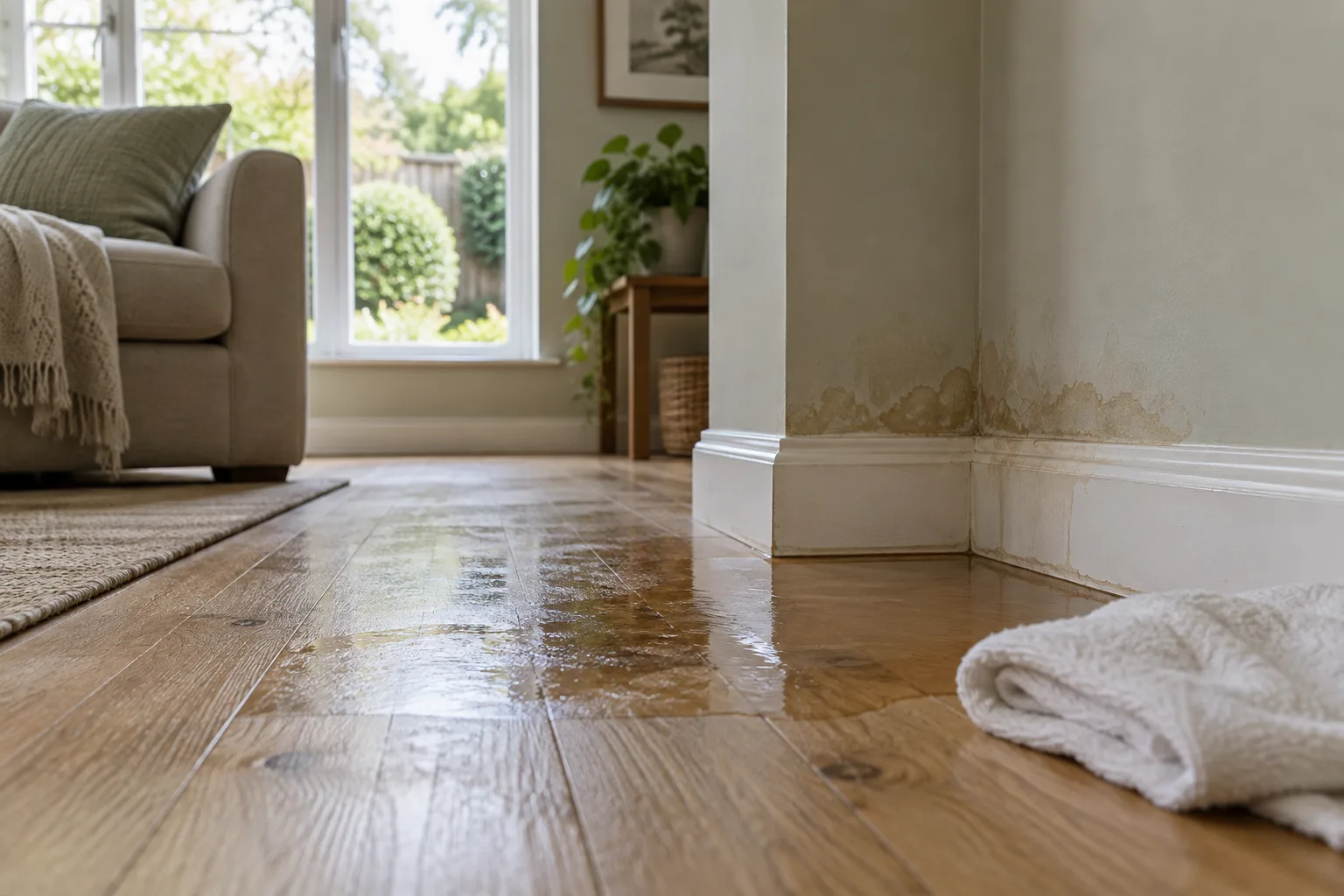
Stop the water source, mitigate further damage, and document everything with photos before cleanup. Then notify your insurer promptly, save all receipts, meet the adjuster on site, and submit any required proof of loss. Most Georgia homeowners policies require reasonable steps to prevent additional damage, so mitigation starts before the claim is approved.
The sequence matters because two clocks start the moment water hits your floor: the damage clock — mold can begin developing within 24 to 48 hours — and the claim clock, since insurers expect prompt notice and reasonable mitigation. The good news for North Fulton homeowners is that the steps that protect your house and the steps that protect your claim are the same steps, done in the same order.
Before any insurance call, handle safety and the source: stop water only if safe, and only shut off power from a dry, safely reachable breaker. If the breaker or panel is wet, inaccessible, or reaching it means entering water, stay out and contact your utility or emergency services as appropriate. Follow the checklist in what to do first after water damage. From there, document, notify your insurer, and contact an available mitigation provider as appropriate.
North Fulton Water Damage Pros is a referral service, not a contractor — we do not perform the work. When you call (678) 944-8612, we help Sandy Springs, Roswell, Dunwoody, Alpharetta, Johns Creek, and Brookhaven homeowners request an introduction to a local restoration contractor who may handle the mitigation — and whose paperwork does double duty as claim evidence.
- Step 1 — Mitigate: stop the source and get water extraction and drying started; your policy expects it.
- Step 2 — Document: photos, video, inventory, receipts, and moisture logs before and during cleanup.
- Step 3 — Notify: report the claim to your insurer promptly and ask exactly what they need from you.
- Step 4 — Adjuster visit: walk the loss with the adjuster and hand over your documentation.
- Step 5 — Proof of loss: submit the sworn statement and estimates, then track the insurer's response.
Why do I have to start mitigation before my insurer approves the claim?
Nearly every homeowners policy includes a duty to mitigate: you must take reasonable steps to prevent further damage, or the insurer can reduce or deny payment for the part that got worse. Emergency water extraction and drying are generally treated as mitigation, so starting them before approval protects both your home and your claim.
Homeowners policies pay for the sudden loss, not for neglect afterward. If a Category 1 supply-line leak sits untouched for a week and turns into a mold problem, the insurer can argue the secondary damage was preventable and pay accordingly. That is why the policy's conditions section requires reasonable emergency measures — and why adjusters respond well to fast, well-documented mitigation.
Mitigation means stopping things from getting worse: water extraction, structural drying with air movers and dehumidification, and removing soaked materials that cannot be saved. Restoration — rebuilding drywall, flooring, and finishes — comes later and usually waits for the adjuster's approval. The difference matters for your claim, and our guide to water mitigation vs restoration breaks down where one ends and the other begins.
Keep mitigation proportionate and documented. You generally do not need the insurer's permission for emergency drying, but you do want sign-off before demolition or rebuild work beyond what safety requires. When in doubt, photograph first and act second, then save the claim number and every instruction the insurer gives you in writing.
What documentation do I need for a water damage insurance claim?
Photograph and video every wet room, the water source, and damaged belongings before anything is moved or discarded. Build a room-by-room inventory with approximate values, keep all receipts, and save daily moisture readings and drying logs from the restoration crew. Strong documentation is the single biggest factor in how smoothly a claim pays.
Start wide, then go narrow: video each room before touching anything, then photograph the water source, the waterline on the walls, serial numbers on damaged appliances and electronics, and each damaged item up close. In Fulton County's older ranches and split-levels, water often travels under flooring — photos of buckled subfloor and stained drywall edges help establish how far the loss actually spread.
The professional file matters as much as your phone's camera roll. A restorer working to the IICRC S500 standard logs moisture meter readings room by room, uses thermal imaging and moisture mapping to show hidden saturation, and records daily drying progress. Those logs prove both the scope of the loss and that drying was done properly — two things adjusters question most.
This is where the inspection earns its keep: a local contractor, if one is available, documents conditions in writing before work begins, and a water damage assessment with a written estimate gives your claim file a professional scope of loss from day one.
- Photos and video: every room, the source, the waterline, and close-ups of items before they are moved.
- Inventory: a room-by-room list of damaged belongings with age and approximate replacement cost.
- Moisture logs: meter readings, thermal imaging notes, and daily drying records from the restoration crew.
- Paper trail: receipts for emergency purchases, lodging if you relocate, and every email from the insurer.
What happens when the insurance adjuster inspects my water damage?
The adjuster walks the property, verifies the cause of loss, measures affected areas, and reviews your documentation before estimating covered repairs. Be ready with photos, the failed component if you kept it, your inventory, and any moisture maps or drying logs. You are allowed to ask questions and to be present for the entire inspection.
Expect the adjuster days — not hours — after you report the claim, which is why emergency mitigation should already be underway by the time they arrive. The adjuster confirms the cause of loss (a burst supply line reads very differently from long-term seepage), measures the affected rooms, and writes an estimate using pricing software. Your documentation fills the gap between what they can still see and what the water actually did.
Walk the inspection with the adjuster and point out everything: the crawl space, the wet insulation, the cabinet toe-kicks. If a contractor's crew is on site, the equipment placement and moisture map give the adjuster hard data instead of guesswork. Take notes on what the adjuster says, and ask when the estimate will arrive and what happens next.
What is a proof of loss and when do I have to file it?
A proof of loss is a signed, sworn statement itemizing what was damaged and what you are claiming, supported by your inventory and estimates. Many policies require it within 60 days of the insurer's request, though deadlines vary by policy. Read your policy's conditions section and ask your insurer to confirm the deadline in writing.
Not every insurer demands a formal proof of loss on every claim — many settle small, clear losses off the adjuster's estimate alone. But when one is requested, treat the deadline seriously, because missing it can jeopardize the claim. The form is sworn, so accuracy matters more than speed: estimate values honestly and mark uncertain items as to-be-determined rather than guessing.
Attach your inventory, a contractor's itemized estimate, the drying logs, and your receipts. If you need more time, ask for an extension in writing before the deadline passes — insurers commonly grant them. This page is general information, not legal or insurance advice; your policy's conditions section and your insurer control what is actually required and when.
Does it matter if the water damage was sudden, gradual, or flood?
Yes — it usually determines whether the claim pays at all. Sudden and accidental discharges, like a burst pipe, are generally covered. Gradual leaks the homeowner should have noticed are commonly excluded, and rising water from outside is a flood, which standard policies exclude and NFIP or private flood policies handle separately.
Adjusters categorize the loss before they price it. A washing machine hose that lets go while you are at work in Dunwoody is the textbook sudden and accidental loss. A slow drip inside a wall in Roswell that stained a ceiling over months invites the gradual leak exclusion — though resulting damage is sometimes still covered even when the failed part itself is not. For the full coverage picture, see does homeowners insurance cover water damage in Georgia.
Rising water is its own world. If a summer thunderstorm pushes the Chattahoochee River or a backed-up storm drain into your Sandy Springs basement, the standard policy's flood exclusion applies, and the claim belongs to an NFIP or private flood policy if you carry one. Sewage backup sits in between: many Georgia policies exclude it unless you bought a water backup endorsement, so check your declarations page.
For the claim process, the practical takeaway is framing and evidence. Never exaggerate or recharacterize how the damage happened — misrepresentation is grounds for denial — but do document the suddenness of a sudden loss: keep the failed component, photograph it in place, and note dates and times, because that is exactly what the adjuster needs to see.
How long does a water damage insurance claim take in Georgia?
Simple, well-documented claims often resolve within several weeks, while large or disputed losses can run months. Georgia insurance regulations require insurers to acknowledge and respond to claims within set timeframes, and mitigation and drying proceed in parallel rather than waiting on approval. Thorough documentation up front is the best way to shorten the timeline.
Georgia's insurance regulations set deadlines for insurers to acknowledge claims and to act on them once proof of loss is received, so a stalled claim is worth a polite written follow-up that cites your claim number and dates. Straightforward Category 1 losses with clean documentation often pay within weeks; contested causation, large inventories, or supplement requests stretch the process into months.
Mitigation never waits for the check. Structural drying in a North Fulton home typically takes a few days, and the rebuild that follows is scheduled separately — see water damage restoration for how the full arc works. As a labeled estimate for the Atlanta market, full restoration typically runs $3,000–$30,000+ depending on scope; actual pricing depends on an on-site inspection, and inspection fees and written-estimate terms are set by a contractor.
Two timelines, one file: the faster the drying logs, photos, and estimates land in the insurer's hands, the faster the claim moves. That is one practical reason to bring in a professional from the start instead of a fan and a wet vac — call (678) 944-8612 and we review your request and may introduce you to an available local contractor, with any contractor fee confirmed directly with a contractor.
Frequently asked questions
Can I throw away water-damaged belongings before the adjuster sees them?
Generally no. Keep damaged items, or at minimum photograph them thoroughly and keep samples of materials like carpet and drywall, until the adjuster confirms in writing that you can dispose of them. If health or safety requires removing sewage-soaked items quickly, document them first and note the date and the reason.
Can I start cleanup before my insurer approves the water damage claim?
Yes. Emergency mitigation — stopping the source, extracting water, and starting drying — is expected under the policy's duty to mitigate, and waiting for approval usually makes damage worse. Document conditions before work starts, keep every receipt, and let the insurer know that mitigation is underway when you report the claim.
Will a water damage claim raise my homeowners insurance premium in Georgia?
It can, but the effect varies by insurer, claim size, and your claim history, and some carriers weigh water losses more heavily than others. This is general information, not insurance advice — ask your agent how a claim would affect your specific policy before filing a borderline small one.
What should I do if my water damage claim is denied?
Ask for the denial in writing with the specific policy language cited, then compare it against your documentation. You can submit additional evidence, request a re-inspection, or file a consumer complaint with the Georgia Office of Commissioner of Insurance. For large disputed losses, some homeowners consult a licensed public adjuster or an attorney.
Do I need a public adjuster for a Georgia water damage claim?
Most straightforward claims settle without one. A public adjuster represents the policyholder, typically for a percentage of the settlement, and can help with large, complex, or disputed losses. Georgia licenses public adjusters, so verify the license before signing anything. This is general information, not legal or insurance advice.
Does the restoration contractor bill my insurance company directly?
Arrangements vary by insurer and claim. A local contractor may provide the itemized estimate, photos, and drying logs your insurer needs, and many insurers pay restoration invoices directly or reimburse you after approval. North Fulton Water Damage Pros never charges homeowners for the connection — we may receive a referral fee if a contractor accepts an introduction.