What to Do First After Water Damage
Need help with your own home?
Tell us your concern. We'll check local contractor availability.
No referral fee · No obligation to hire
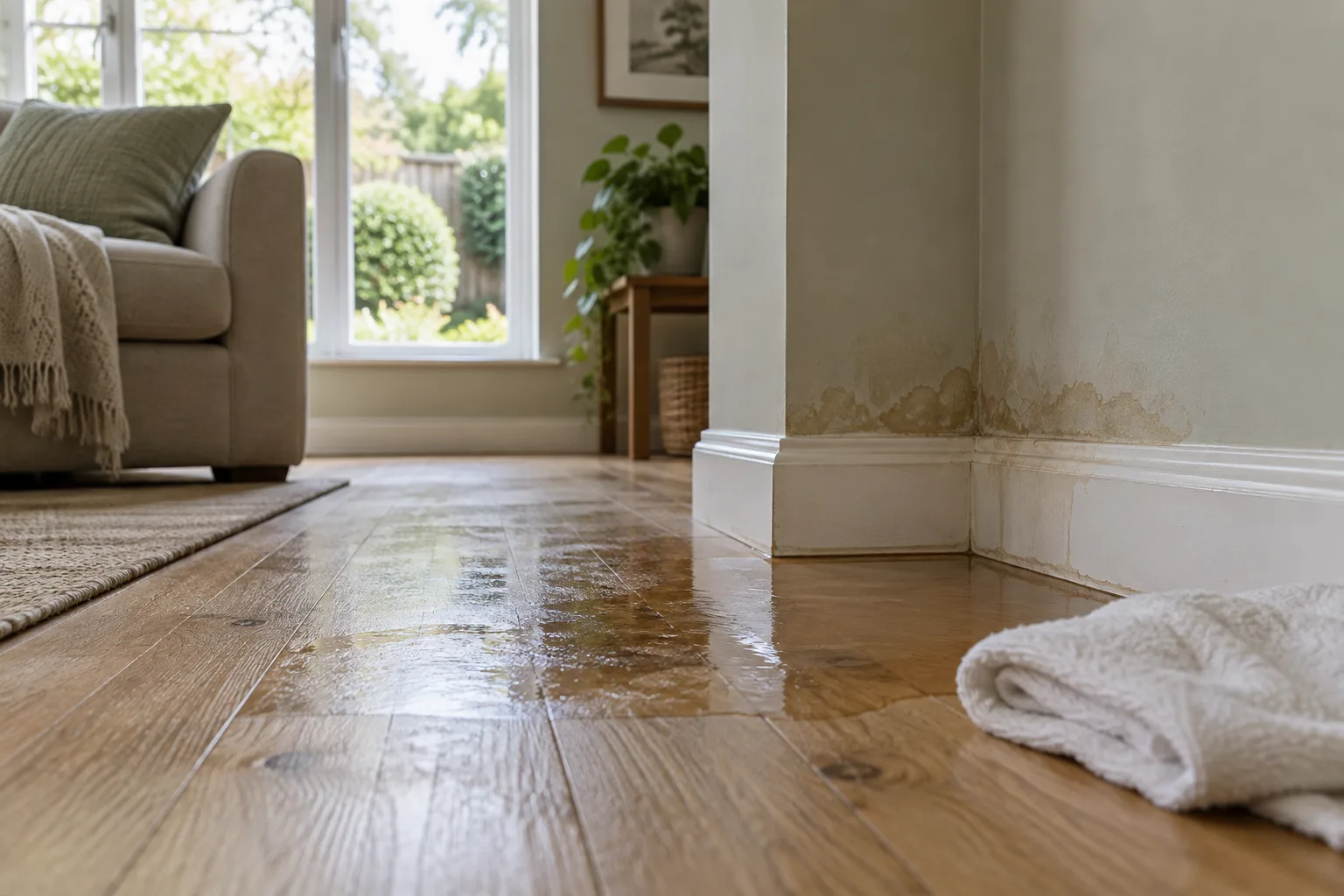
What should you do first when water damage happens?
Only shut off power from a dry, safely reachable breaker. If the breaker or panel is wet, inaccessible, or reaching it means entering water, stay out and contact your utility or emergency services as appropriate. For active spreading water, sewage, electrical, or structural hazards, contact an available restoration provider, utility, or emergency services as appropriate; this referral form does not dispatch or guarantee a response. Stop the source only if safe, document the damage, and start drying promptly. Mold can begin within 24–48 hours.
The first minutes after discovering water damage set the tone for everything that follows. In priority order: protect people first, stop the water, document the damage, then dry it out fast. Doing them in that order keeps your family safe and gives you the best shot at a smaller loss and a smoother insurance claim.
Speed matters because water keeps moving. It wicks into drywall, soaks the subfloor, and saturates insulation, and mold can begin to develop within 24–48 hours of exposure in our humid subtropical climate. The sooner extraction and structural drying start, the less secondary damage you'll face.
North Fulton Water Damage Pros, operated by Stratum Relay LLC, is a disclosed referral service for Sandy Springs, Roswell, Dunwoody, Alpharetta, Johns Creek, Brookhaven, and the North Fulton area. We don't do the work ourselves — we may introduce you to an available local contractor who does. The connection is free to you. For active emergencies, you can request an introduction to emergency referral information; the form does not dispatch a crew.
How do you stay safe after water damage?
Only shut off power from a dry, safely reachable breaker. If the breaker or panel is wet, inaccessible, or reaching it means entering water, stay out and contact your utility or emergency services as appropriate. Never touch electrical devices while standing in water. Avoid sewage or black water and watch for slip hazards. If a ceiling is sagging or the water may be contaminated, stay out and contact emergency help as appropriate.
Water and electricity are a deadly mix. Only shut off power from a dry, safely reachable breaker. If the breaker or panel is wet, inaccessible, or reaching it means entering water, stay out and contact your utility or emergency services as appropriate. Never stand in water to reach a switch or unplug a device, and keep children and pets away from wet zones until the area is cleared.
Beware of contaminated water. Category 2 and Category 3 water — including any sewage backup or black water — carries bacteria and health hazards and should not be touched without proper protective equipment. If you see or smell sewage, leave it to the pros. Wet floors are also slippery, so move carefully and watch your footing.
These are general safety pointers, not a substitute for professional judgment. If anything feels unsafe, get out and wait for trained help.
- Shut off electricity only from a dry, safely reachable breaker. Otherwise stay out and contact your utility or emergency services as appropriate.
- Avoid sewage and black water — Category 2/3 water is a health hazard.
- Watch for slips on wet floors and stairs.
- Stay out of rooms with sagging ceilings or structural concerns.
How do you stop the water source?
Find and stop the source fast. For plumbing leaks, shut off the main water valve to the house or the local fixture valve. For appliance failures, turn off that appliance's supply line. Stopping inflow prevents the loss from growing while you arrange professional help.
Every gallon you keep out of your home is damage you don't have to repair. If the water is coming from plumbing, close the main shutoff valve — usually located where the water line enters the home, near the water heater, or at the meter. For a single fixture like a toilet or sink, the local shutoff valve beneath it may be enough.
If an appliance is the culprit — a washing machine, dishwasher, water heater, or refrigerator line — shut off that appliance's dedicated supply valve. Knowing where your main shutoff is before an emergency saves precious minutes, so locate and label it today.
If the water is coming from outside — storm runoff, rising groundwater, or a flood or storm event — you can't shut off a valve, so focus on safety and getting professional extraction started as soon as the situation is safe.
How should you document water damage for insurance?
Before any cleanup, take dated photos and video of the source and all damage, room by room. List damaged belongings with values, save receipts, and note what happened and when. Thorough documentation gives your adjuster a clear record and supports your claim.
Once you're safe and the source is stopped, document before you clean. Photos and video taken while the damage is fresh are far more persuasive than memories. Capture the water source, the standing water, and every affected room and item, and record the date and time the loss occurred.
Make a written inventory of damaged contents and keep receipts for any emergency repairs, lodging, or supplies. Hold onto damaged materials until your adjuster has reviewed them when it's safe to do so. For more on coverage and what documentation helps, see our guide on whether Georgia homeowners insurance covers water damage.
A local contractor, if one is available, can add a professional written scope with moisture mapping and thermal imaging that complements your own photos — but remember, your insurer decides the claim. This page is general information, not insurance advice; check your own policy.
- Photograph and video the source and all damage before cleanup.
- List damaged belongings with descriptions and values.
- Save receipts for emergency expenses.
- Keep damaged items until the adjuster reviews them, if safe.
How fast should you start mitigation and get help?
Start mitigation as fast as possible — ideally within hours. Mold can begin within 24–48 hours, and the longer materials stay wet, the more they're damaged. Call for professional water extraction and structural drying right away; quick action shrinks both the repair scope and cost.
Mitigation is the race against the clock. The longer drywall, subfloor, and insulation stay saturated, the more they swell, delaminate, and grow mold. Because mold can begin to develop within 24–48 hours, the goal is to get professional water extraction and drying underway the same day whenever possible.
A professional restorer brings tools you don't have at home: truck-mounted extraction, air movers, commercial dehumidification, moisture meters, and psychrometric readings to confirm the structure is truly dry — not just dry on the surface. They follow IICRC S500 standards for water damage and IICRC S520 for any mold concerns.
As a labeled estimate for the Atlanta market, water extraction commonly runs $1,300–$5,500 and structural drying $2,000–$6,000, but actual pricing depends on an on-site inspection — and inspection fees and written-estimate terms are set by a contractor. When time is critical, you can request an introduction to a contractor for an emergency referral.
What should you NOT do after water damage?
Don't use a household vacuum on standing water—it can cause electrocution and equipment damage. Only shut off power from a dry, safely reachable breaker. If the breaker or panel is wet, inaccessible, or reaching it means entering water, stay out and contact your utility or emergency services as appropriate. Do not enter rooms with sagging ceilings, contaminated water, or live electrical hazards. Do not discard damaged items before documenting them.
Some well-meaning instincts make things worse. Don't use a household or shop vacuum on a lot of water — it's not built for it and creates a serious shock risk. Don't run ceiling fans or lights on circuits in flooded areas, and don't enter a room with a sagging or bulging ceiling, which can signal a collapse risk from water pooling above.
Don't go near sewage or black water without protection, and don't try to remediate it yourself — that's a job for a contractor equipped for professional sewage cleanup with containment, antimicrobial treatment, and HEPA filtration. And don't toss damaged belongings before you've photographed and inventoried them.
Finally, don't delay. Waiting even a day can turn a manageable extraction into a mold remediation project. Get safe, stop the source, document, and call for help.
- Don't use a household vacuum on standing water.
- Don't enter rooms with sagging ceilings or live electrical hazards.
- Don't touch or attempt to clean sewage or black water yourself.
- Don't discard damaged items before documenting them, and don't delay drying.
Frequently asked questions
What is the very first thing to do after water damage?
Only shut off power from a dry, safely reachable breaker. If the breaker or panel is wet, inaccessible, or reaching it means entering water, stay out and contact your utility or emergency services as appropriate. Avoid contaminated water. Once safe, stop the water source, document the damage with photos, and contact an available restoration provider or appropriate emergency service. Safety comes before cleanup.
How quickly does water damage need to be addressed?
As fast as possible — ideally within hours. Mold can begin to develop within 24–48 hours of water exposure, and wet materials degrade the longer they stay saturated. Prompt professional extraction and drying limits secondary damage and reduces overall cost.
Can I clean up water damage myself?
Minor, clean-water spills you can often handle, but standing water, contaminated water, and saturated building materials call for professionals. Household vacuums aren't safe for large volumes of water. We may introduce you to a local contractor equipped for proper extraction and drying.
Should I take photos before cleaning up?
Yes. Document the source and all damage with dated photos and video before you clean or remove anything, and keep an inventory of damaged items. This record supports your insurance claim. Your insurer makes the final coverage decision, so check your own policy.
Does North Fulton Water Damage Pros do the cleanup?
No. We are a disclosed referral service, not a contractor. We help North Fulton homeowners request an introduction to a local contractor who may handle extraction, drying, and restoration. There is no fee to request the connection; we may receive a referral fee if a contractor accepts an introduction.