Water Damage Restoration in Sandy Springs, GA
Take the next step for your home
Tell us your concern. We'll check local contractor availability.
No referral fee · No obligation to hire
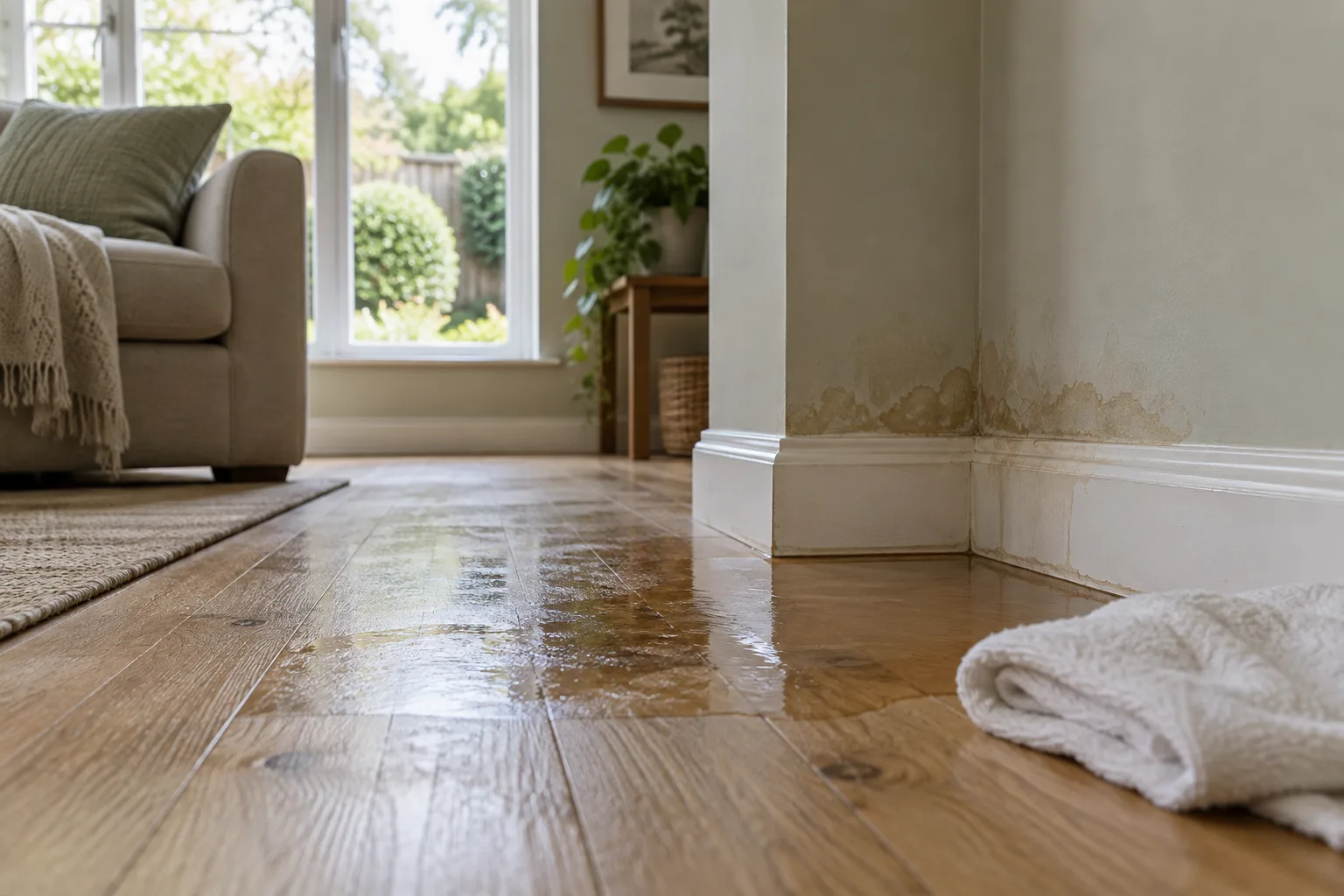
What is water damage restoration and how does it work in Sandy Springs, GA?
Water damage restoration is the process of removing water, drying the structure, and repairing damage after a leak or flood. North Fulton Water Damage Pros does not perform this work. We may introduce you to an available local contractor who may handle the needed work.
North Fulton Water Damage Pros, operated by Stratum Relay LLC, is a disclosed marketing and referral service. We are not a contractor and we do not perform any restoration work ourselves. Instead, we help North Fulton homeowners request an introduction to a local water damage restoration contractor who does the actual extraction, drying, and repairs. There is no fee to request the connection; we may receive a referral fee if a contractor accepts an introduction.
If a contractor accepts an introduction, ask whether the proposed assessment covers the source, affected materials and possible restoration steps. Confirm fees, credentials, methods and scope directly. IICRC S500 is industry guidance, not a promise about an unknown provider's procedures.
Whether you need fast water extraction, thorough structural drying, or mold remediation after a delayed leak, that contractor may manage the full scope. If the situation is urgent, our emergency water damage help referral request can be reviewed; we do not dispatch crews or guarantee a response.
What are the steps in the water damage restoration process?
Professional restoration follows five core steps: inspection and moisture mapping, water extraction, structural drying and dehumidification, cleaning and antimicrobial treatment, and repair or rebuild. A contractor we may introduce you to may perform the needed steps; confirm the scope directly to dry your home and restore it safely.
A restoration plan may involve an assessment, extraction, drying, cleaning and repair, depending on conditions. Tools such as moisture meters or thermal imaging may assist the investigation. Ask what the provider proposes and what findings or claim documentation they will supply; these are not guaranteed by an introduction.
The steps below describe possible elements of restoration, not a promised scope. Confirm assessment fees, methods, exclusions and completion criteria directly with the provider.
- Inspection & moisture mapping — a contractor may inspect the property, use thermal imaging and psychrometric readings to map how far moisture has spread, and grade the water category.
- Water extraction — standing water is removed fast with truck-mounted extractors and submersible pumps; see water extraction for details.
- Structural drying & dehumidification — air movers and commercial dehumidification pull moisture out of framing and flooring during structural drying.
- Cleaning & antimicrobial treatment — affected surfaces get antimicrobial treatment and HEPA filtration to discourage mold growth.
- Repair & rebuild — drywall, flooring, trim, and paint are restored so the home looks the way it did before the loss.
What are the categories of water damage (Category 1, 2, 3)?
Water damage is graded into three categories under IICRC S500: Category 1 is clean water from a sanitary source, Category 2 is gray water with some contamination, and Category 3 is black water that is grossly unsanitary. The category drives how a contractor safely handles the cleanup.
Restoration work is planned around the source and contamination of the water, affected materials and safety hazards. Ask the contractor how they assess those conditions and which standards, such as IICRC S500, inform their proposed scope. A referral does not verify their methods or credentials.
Category 1 (clean water) comes from a sanitary source like a broken supply line or overflowing sink. Category 2 (gray water) carries some contamination, such as discharge from a dishwasher or washing machine. Category 3 (black water) is grossly unsanitary, including sewage backup and river flooding, and demands strict containment.
If you suspect a contaminated source, do not handle it yourself. A contractor may have equipment for hazardous work and can manage sewage cleanup and mold remediation safely. Unaddressed Category 2 water can degrade into Category 3 over time, which is why a fast response matters.
Why is water damage so common in North Fulton and the Atlanta metro?
Metro Atlanta averages roughly 50 inches of rain per year, and the humid subtropical climate keeps moisture high. Combined with finished basements, aging plumbing, and runoff near the Chattahoochee River, homes across North Fulton see frequent leaks, seepage, and flooding.
The Atlanta area receives about 50 inches of rain per year, well above the national average. That volume of water, paired with a humid subtropical climate, means soil stays saturated and basements stay vulnerable across Sandy Springs, Roswell, Alpharetta, Johns Creek, and Brookhaven.
Many North Fulton homes have finished basements and crawlspaces that sit below grade, so heavy storms push water through foundation cracks and overwhelm a sump pump. Properties near the Chattahoochee River and low-lying areas of Fulton County face added flood risk during flash-flooding events.
Aging plumbing is the other major driver. Older supply lines, water heaters, and fittings fail without warning, and a slow gradual leak behind a wall can feed mold for weeks before anyone notices. To reduce risk, review our guide on how to prevent basement flooding in Atlanta.
How much does water damage restoration cost in the Atlanta area?
As a labeled estimate for the Atlanta market, full water damage restoration typically ranges from $3,000 to $30,000 or more, depending on the water category, square footage, and materials affected. Actual pricing depends on an on-site inspection, and inspection fees and written-estimate terms are set by a contractor.
Cost varies widely because a small clean-water leak is far cheaper to resolve than a contaminated, whole-floor flood. As a labeled estimate for the Atlanta market, full restoration commonly falls in the $3,000–$30,000+ range. Standalone services have their own typical ranges: water extraction around $1,300–$5,500 and structural drying around $2,000–$6,000.
These are general market ranges, not quotes. Your actual price depends on factors a technician can only assess in person, including the water category, how long the water sat, and whether the subfloor or drywall must be replaced. The good news is the on-site inspection and written-estimate terms are set by a contractor; confirm any fee directly.
For a fuller breakdown of what drives pricing in our area, see our water damage restoration cost guide. Many losses are covered by insurance, so a contractor may document everything to support your claim documentation.
How does the inspection and referral work?
There is no fee to request the connection. When you contact us, we may introduce you to an available local contractor who may offer an on-site assessment and written estimate; confirm whether it is offered, what it includes, and any fee directly. The homeowner pays nothing for the connection; we may receive a referral fee if a contractor accepts an introduction. There is no obligation.
An introduction may be requested but is not guaranteed. If a contractor accepts, ask whether an assessment is offered, whether a written estimate is provided, and what each costs. You choose whether to accept the contractor's separate terms.
Because we may receive a referral fee if a contractor accepts an introduction, your cost for using our service is $0. You only ever pay the restoration company directly for work you approve, and much of that may be covered by insurance under a sudden and accidental loss.
Ready to start? Request your water damage assessment and we review your request and may introduce you to an available local contractor. If water is actively spreading, contact an available restoration provider, utility, or emergency service as appropriate first. Our emergency water damage help referral form does not dispatch or guarantee a crew; scheduling is arranged directly.
Frequently asked questions
Does North Fulton Water Damage Pros do the restoration work itself?
No. We are a disclosed referral service operated by Stratum Relay LLC, not a contractor. We may introduce you to an available local water damage restoration contractor who may perform all inspection, extraction, drying, and repair work.
How much does it cost to get connected with a contractor?
Nothing. There is no fee to request the connection; a contractor may set inspection fees and written-estimate terms directly. We may receive a referral fee if a contractor accepts an introduction, so you are never charged for the introduction.
How fast should I act after discovering water damage?
As fast as possible. Mold can begin to develop within 24 to 48 hours of water exposure, and standing water continues to soak into the subfloor and drywall. Requesting an inspection quickly can help limit damage and cost.
Will my homeowners insurance cover water damage restoration?
It depends on the cause. Sudden and accidental losses like a burst pipe are often covered, while gradual leaks and flooding may be excluded. See our Georgia insurance guide, and a contractor may document the loss to support your claim.
What areas do you cover?
We help homeowners request an introduction in Sandy Springs and the surrounding North Fulton and Atlanta metro communities, including Roswell, Dunwoody, Alpharetta, Johns Creek, and Brookhaven in Fulton County and nearby areas, with a local contractor.
What should I do first after finding water in my home?
If it is safe, stop the water source and avoid contaminated water. Then request an inspection so a contractor can assess the damage. Our what-to-do-first guide walks through the immediate steps to take.