Water Damage Assessment in North Fulton, GA
Take the next step for your home
Tell us your concern. We'll check local contractor availability.
No referral fee · No obligation to hire
What does a water damage assessment include?
A water damage assessment may include moisture readings, imaging, or a written scope, but a contractor decides what to offer. If a contractor accepts an introduction, confirm the assessment contents, any fee, credentials, scope, and timing directly; requesting the referral has no fee and no obligation.
North Fulton Water Damage Pros is a disclosed marketing and referral service operated by Stratum Relay LLC. We are not a contractor and do not perform inspections or restoration ourselves. We help North Fulton homeowners request an introduction to a local water damage restoration contractor, if one is available and accepts the request.
Some contractors use moisture mapping, thermal imaging, psychrometric readings, or other methods. Ask a contractor what methods the assessment includes and whether any fee applies before agreeing to a visit.
An assessment may result in a written scope or estimate, but content and terms vary by contractor. If you want background first, our water damage restoration overview explains how inspection, extraction, and drying can fit together.
Why are assessment fees contractor-set, and is the referral no-obligation?
There is no fee to request the connection. We may receive a referral fee if a contractor accepts an introduction. A contractor may offer an assessment or written estimate, but that contractor decides the scope, fee, and terms; confirm them directly before agreeing to a visit. There is no obligation to hire anyone.
The economics are straightforward: homeowners pay nothing for the referral request. We may receive a referral fee if a contractor accepts an introduction. Any assessment or restoration fee is set by a contractor and paid directly under terms you confirm with that contractor.
An on-site assessment or written estimate may be offered, but it is not guaranteed and its contents vary. Ask what is included, whether a fee applies, and whether you can decline further work before scheduling.
When should I schedule a water damage inspection?
Seek qualified advice promptly after a leak, overflow, new water stain, musty smell or warped flooring. For active flooding or safety hazards, contact an available restoration provider, utility or emergency services as appropriate rather than waiting for this referral service. Ask any contractor whether an assessment is available, what it covers and what it costs.
Don't wait for visible disaster. Hidden moisture from a slow supply-line drip, a roof leak after an Atlanta storm, or a dishwasher that overflowed last week can quietly soak the subfloor and framing while the surface looks fine.
Trapped moisture can support mold growth. EPA recommends drying wet materials within 24–48 hours where safely possible. A contractor may use moisture readings or thermal imaging to investigate hidden dampness; ask which methods are appropriate and included in that contractor's assessment.
- After any leak, burst pipe, water heater failure, or appliance overflow.
- When you notice a musty or earthy smell that won't go away.
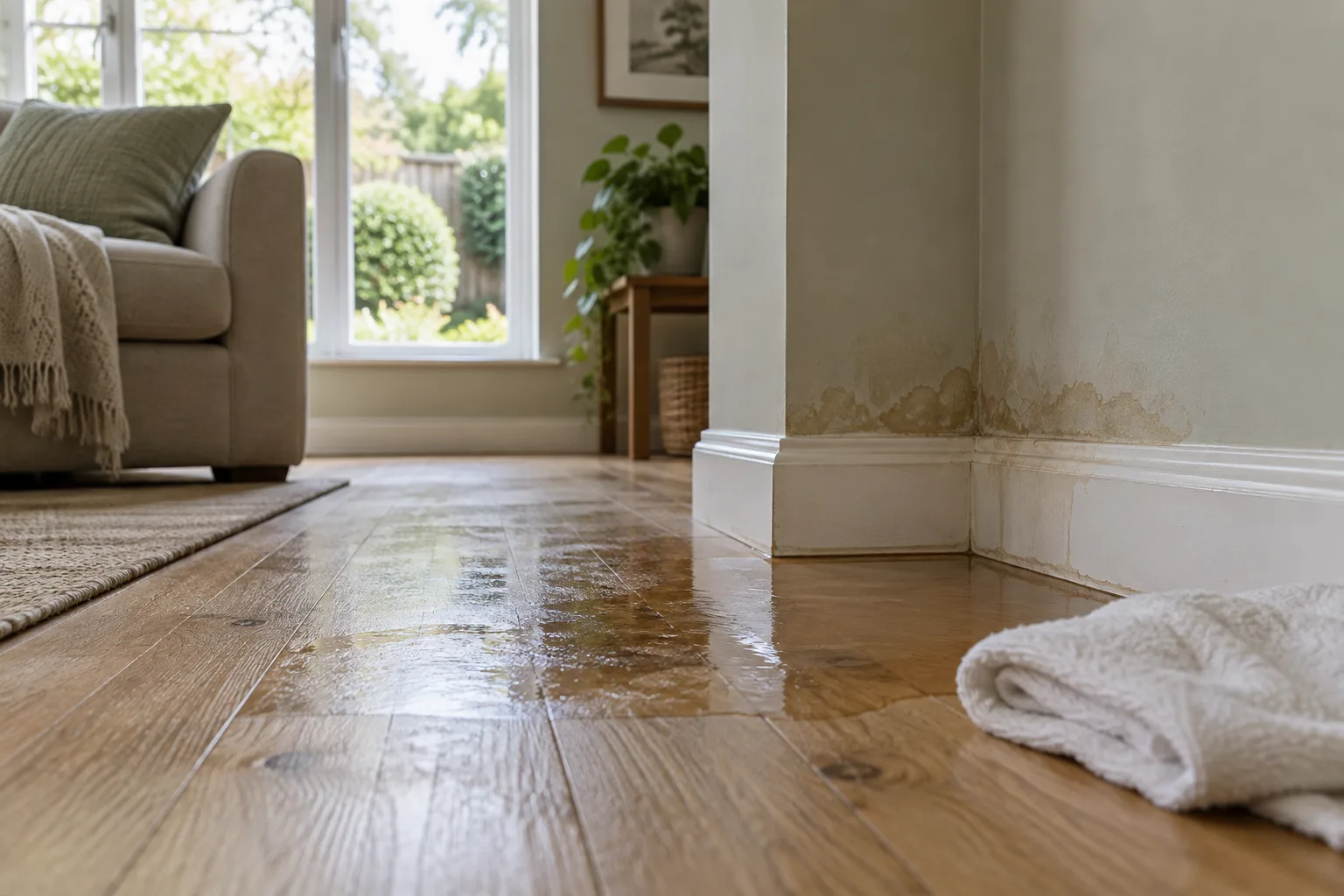
- When you see water stains, discoloration, bubbling paint, or warped flooring.
- After heavy rain or storms, especially if you have a basement or low-lying yard.
- Before you buy or sell a home with any history of water intrusion.
What does the written inspection report cover?
If a contractor provides a written report, it may identify the water category, affected materials, recommended work, or an estimate. Contents and format vary; ask the contractor what documentation is included and whether any fee applies. Any reference to IICRC guidance should be confirmed with that contractor.
A report may classify the water source and describe affected materials, but a contractor determines the approach and documentation. For health or contamination questions, follow qualified local and public-health guidance.
A contractor may recommend extraction, structural drying, or mold remediation depending on the observed conditions. Our structural drying and mold remediation guides explain these services generally; confirm proposed scope directly.
If a written estimate is offered, it may be labeled and itemized, but format and detail vary. Our water damage restoration cost guide provides general Atlanta-market ranges, not a quote.
How does the inspection support an insurance claim?
If a contractor offers a report, it may provide claim documentation such as dated findings, photos, moisture readings, an itemized scope, or an estimate. Your contractor confirms what is included, and your insurer decides coverage.
Documentation can help an insurer evaluate a sudden and accidental loss, but a contractor decides what to record and provide. Confirm any report contents and fees directly.
Georgia homeowners policies often cover sudden and accidental water damage, while gradual leaks and flood are often excluded. We cannot determine coverage; your insurer makes that decision. To request an introduction, contact us; the form does not dispatch or guarantee a contractor.
Frequently asked questions
Who sets the inspection fee?
A contractor, if one is available, sets any inspection or assessment fee and written-estimate terms directly. There is no fee to request a referral, but an assessment may have a contractor-set fee; confirm it before agreeing to a visit. We may receive a referral fee if a contractor accepts an introduction. There is no obligation to proceed.
Who actually performs the inspection?
Not us. North Fulton Water Damage Pros is a referral service operated by Stratum Relay LLC. If a contractor accepts an introduction, that contractor decides whether to offer an assessment and what it includes; confirm credentials, scope, timing, and fees directly.
Do I have to hire a contractor after the inspection?
No obligation is created by requesting a referral. If a contractor offers an assessment, confirm its terms directly; you can decline further work and seek other opinions.
What equipment does the inspection use?
Equipment and methods vary. Ask a contractor whether the assessment uses moisture meters, mapping, thermal imaging, psychrometric readings, or other methods, and confirm any fee before agreeing.
Will the report help with my insurance claim?
It may. If a contractor provides a dated report, photos, readings, or an estimate, those materials may help document a loss. Your insurer still decides coverage, and a contractor confirms what documentation is provided.