Does Insurance Cover Mold Remediation in Georgia?
Need help with your own home?
Tell us your concern. We'll check local contractor availability.
No referral fee · No obligation to hire
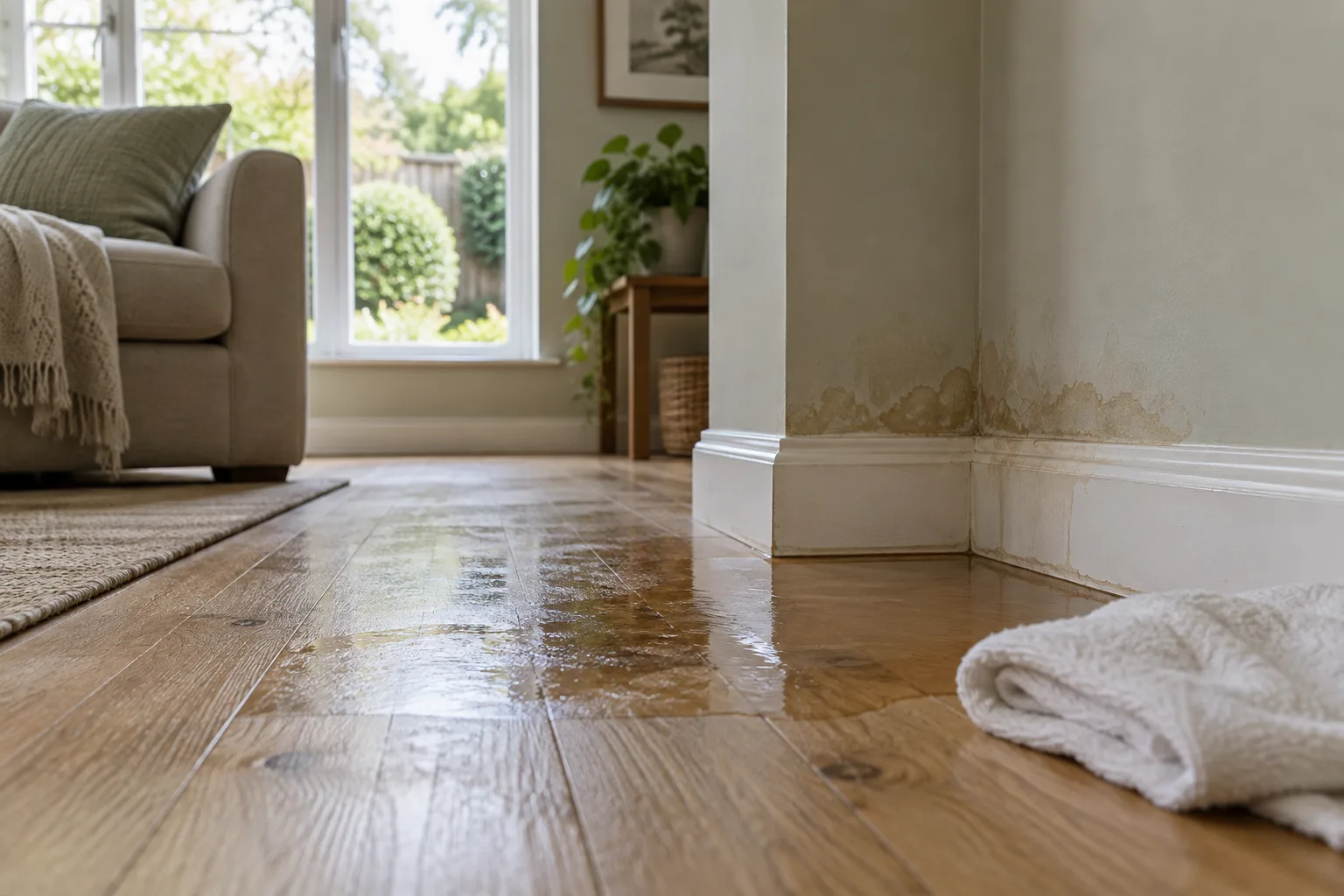
Does homeowners insurance cover mold remediation in Georgia?
Usually only in one scenario: the mold grew from a sudden, accidental water loss your policy already covers, like a burst pipe. Even then, most Georgia homeowners policies cap mold payouts with a separate mold limit. Mold from gradual leaks, deferred maintenance, or everyday humidity is typically excluded. Always confirm with your insurer — this is general information, not advice.
The phrase that controls everything is sudden and accidental. If a supply line bursts in a Roswell laundry room and mold blooms on wet drywall before the structure dries, the remediation is generally handled as part of the covered water loss. If the same wall molded because a fitting dripped inside the cavity for months, most carriers call it a gradual leak and deny the mold portion — often the water damage too. In other words, the cause of the moisture, not the mold itself, usually decides the claim. Our guide to whether homeowners insurance covers water damage in Georgia walks through that underlying question in detail.
Georgia's humid subtropical climate raises the stakes. Metro Atlanta averages roughly 50 inches of rain a year, and homes from Sandy Springs to Johns Creek contend with damp crawl spaces, summer thunderstorm season, and moisture that wicks into subfloors along the Chattahoochee River corridor. Because mold pressure is constant here, nearly every policy sold in Fulton County pairs mold coverage with conditions, caps, or exclusions — so the details below matter more than the marketing on the front of your policy packet.
One ground rule before going further: this page is general information, not legal or insurance advice. Every policy is worded differently, and coverage decisions belong to your insurer based on your specific policy language. Use this guide to ask sharper questions, not as a coverage promise.
What is a mold limit or mold endorsement on a Georgia policy?
A mold limit is a sub-limit inside your policy that caps what the insurer will pay for mold remediation, testing, and related repairs — often well below the full cost of professional remediation. Some Georgia carriers sell mold endorsements that raise the cap. Check your declarations page for fungus, wet rot, or microbial coverage language.
Even when mold is covered, most homeowners policies do not pay for it the way they pay for a destroyed roof. Carriers attach a fungus, mold, wet rot, or dry rot sub-limit — a hard cap on what they will spend on mold remediation, testing, containment, and tear-out, regardless of your overall dwelling limit. That cap is frequently lower than what a full professional remediation actually costs in the Atlanta market, which surprises homeowners in Dunwoody and Alpharetta at the worst possible moment.
Two practical moves follow. First, read your declarations page and any fungus or microorganism endorsement language now, before a loss, and ask your agent whether a higher mold limit is available for an added premium. Second, get real numbers early: our breakdown of mold remediation costs in North Fulton shows typical project ranges, so you can see how far your sub-limit would actually stretch.
Which mold claims do Georgia insurers usually deny?
Insurers most often deny mold tied to gradual leaks, long-term seepage, deferred maintenance, poor ventilation, or ordinary Georgia humidity. Flood-driven mold is excluded under standard homeowners policies too — that is an NFIP question. The common thread: if the underlying water event was not sudden and accidental, the resulting mold usually is not covered either.
Denials almost always trace back to the source of the moisture. Adjusters are trained to distinguish a one-time, sudden event from long-term conditions a homeowner could have caught — and Georgia's climate gives them plenty of long-term suspects to point at. The most common denial patterns look like this:
None of these is necessarily the final word — policy wording varies by carrier, and a denial can sometimes be revisited with better documentation of a sudden cause. But they explain why two neighbors in Brookhaven can have nearly identical mold problems and opposite claim outcomes.
- Gradual leaks: a pinhole drip inside a wall, a slow toilet seal, a failing shower pan — moisture accumulating over weeks or months is the classic exclusion.
- Deferred maintenance: mold traced to a roof you knew was leaking, failed caulk, or gutters dumping water against the foundation.
- Humidity and condensation: mold in a poorly ventilated crawl space or attic with no sudden water event behind it.
- Flood exclusion: rising water from storms or creeks is excluded under standard policies, and so is the mold that follows it.
- Sewer backup without an endorsement: mold after a sewage backup typically requires a separate water backup endorsement to be covered.
Why does fast, documented drying protect mold coverage?
Because policies require you to mitigate damage, and adjusters look for proof you acted quickly. Mold can begin developing within 24 to 48 hours of water exposure, so fast professional drying — documented with photos, moisture readings, and a drying log — shows the mold came from a covered sudden loss, not from neglect the insurer can exclude.
Every homeowners policy includes a duty to mitigate: after a loss, you must take reasonable steps to prevent further damage. Mold is exactly the kind of further damage insurers have in mind. It can begin developing within 24 to 48 hours of water exposure — our guide on how fast mold grows after water damage covers that timeline — so a homeowner who lets wet drywall sit for two weeks hands the carrier an argument that the mold was preventable.
Fast professional drying does two jobs at once. Physically, structural drying with air movers, dehumidification, and moisture mapping removes the conditions mold needs to spread. On paper, it creates the evidence an adjuster wants to see: dated photos, moisture meter readings, a day-by-day drying log, and an invoice showing the response began promptly. A restorer working to the IICRC S500 water damage standard documents all of this as a matter of routine, and that claim documentation is what separates a covered sudden loss from an excluded neglect story.
Does flood insurance cover mold after a flood in Georgia?
Sometimes, with strict conditions. Standard homeowners policies exclude flood entirely, so mold after rising water is an NFIP or private flood policy question. NFIP generally covers mold only when caused by the flood itself and only if you could not reasonably prevent it — owners are expected to dry and ventilate the home as soon as floodwater recedes.
Standard homeowners policies carry a flood exclusion: rising water from heavy rain, storm runoff, or an overflowing creek is not covered, and neither is the mold that follows it. In flood-prone pockets of North Fulton — low-lying lots near the Chattahoochee River, streets that drain poorly off the GA-400 corridor — that gap is closed only by a separate flood policy, usually through the National Flood Insurance Program (NFIP) or a private flood carrier.
NFIP policies treat mold cautiously. As a general rule, mold and mildew damage is covered only when it results directly from the flood and only if it could not reasonably have been avoided — policyholders are expected to dry, ventilate, and clean the home promptly once floodwater recedes and access is possible. Mold that develops because a flooded basement sat untouched for weeks is routinely excluded. The practical takeaway matches the homeowners-policy lesson: act fast, document everything, and confirm the specifics with your flood insurer, since this is general information rather than advice.
How do I document a mold claim for the adjuster?
Photograph the water source and every affected room before cleanup, save plumber and restoration invoices, keep moisture meter readings and drying logs, and report the loss promptly. Adjusters in Georgia weigh timeline evidence heavily: documentation showing the mold followed a sudden covered loss — not weeks of seepage — is what keeps a mold claim alive.
Mold claims live or die on timeline evidence. Your job is to show a sudden covered water event, a prompt response, and mold that traces to that event rather than to long-term conditions. Our walkthrough of the water damage insurance claim process in Georgia covers the full claim sequence; the mold-specific essentials are below.
If your carrier requests a sworn proof of loss, take the deadline seriously and ask the adjuster exactly which supporting documents they want. Organized claim documentation does not guarantee payment — coverage always comes down to your policy language — but disorganized documentation is one of the easiest ways to lose a mold claim you might otherwise have won.
- Photograph and video the water source, any standing water, and every affected room before cleanup or tear-out begins.
- Report the loss to your carrier promptly and record the date, time, and claim number.
- Keep every invoice: plumber, restoration work, equipment, and materials.
- Save moisture meter readings, thermal imaging captures, and the drying log from whoever dries the structure.
- Hold on to damaged materials, or clear photos of them, until the adjuster has inspected — they are part of your proof of loss.
- Get any remediation protocol and post-remediation documentation in writing.
What does mold remediation cost if insurance will not pay?
As a labeled estimate for the Atlanta market, professional mold remediation typically runs $1,500 to $6,000 depending on the affected area, containment needs, and materials removed. Actual pricing depends on an on-site inspection — and the inspection fees and written-estimate terms from the available contractor are confirmed directly.
As a labeled estimate for the Atlanta market, professional mold remediation typically runs $1,500 to $6,000, depending on the square footage involved, whether containment and negative air pressure are required, how much drywall or subfloor must be removed, and whether HEPA filtration and antimicrobial treatment are part of the protocol. If the source water event also left the structure wet, structural drying typically adds $2,000 to $6,000 as a separate labeled estimate. Actual pricing always depends on an on-site inspection.
Inspection fees are confirmed directly with a contractor here. North Fulton Water Damage Pros is a disclosed marketing and referral service—not a contractor, and we do not perform remediation. We may introduce you to an available local restoration contractor; confirm scope, methods, documentation, timing, and fees directly. You pay nothing to request the connection, and we may receive a referral fee if a contractor accepts an introduction. Ask whether a written estimate is offered before deciding.
Frequently asked questions
Does homeowners insurance pay for mold testing or air sampling in Georgia?
Usually only as part of a covered claim, and the cost typically counts against your mold limit. If the underlying water loss is covered, reasonable testing tied to the remediation protocol is often payable. Standalone testing for peace of mind, with no covered loss behind it, is generally an out-of-pocket expense.
Can I buy extra mold coverage before anything goes wrong?
Often, yes. Many carriers writing policies in Georgia offer an optional mold or fungus endorsement that raises the default sub-limit for an added premium. Ask your agent what limits are available and what the endorsement still excludes — it has to be in place before the loss, never after mold is discovered.
Is mold from a sewage backup covered?
In most cases only if you carry a water backup endorsement. Standard policies exclude sewer and drain backups, so mold following a Category 3 sewage event usually falls outside base coverage. Even with the endorsement, the mold portion typically still runs through your policy's mold limit and conditions.
Will filing a mold claim raise my insurance rates in Georgia?
It can affect future premiums or renewal decisions, because water and mold claims are reported to claim-history databases that insurers check. That is one reason to get an on-site inspection and written estimate first: if the damage is minor or clearly below your deductible, you may decide a claim is not worth filing.
Who actually decides whether my mold remediation is covered?
Your insurance company, applying your specific policy language — not a restoration contractor, a referral service, or this guide. Everything on this page is general information, not legal or insurance advice. Read your declarations page, ask your adjuster to point to the exact provisions being applied, and get coverage positions in writing.
Does North Fulton Water Damage Pros handle my insurance claim?
No. North Fulton Water Damage Pros is a marketing and referral service, not a contractor or an adjuster. We help homeowners request an introduction in Sandy Springs, Roswell, Alpharetta, and nearby North Fulton communities with a local restoration contractor, and that contractor can document the loss in a way that supports your claim. There is no fee to request the connection; confirm any inspection fee directly with a contractor.