Flooded Basement Cleanup Cost in North Fulton, GA
Need help with your own home?
Tell us your concern. We'll check local contractor availability.
No referral fee · No obligation to hire
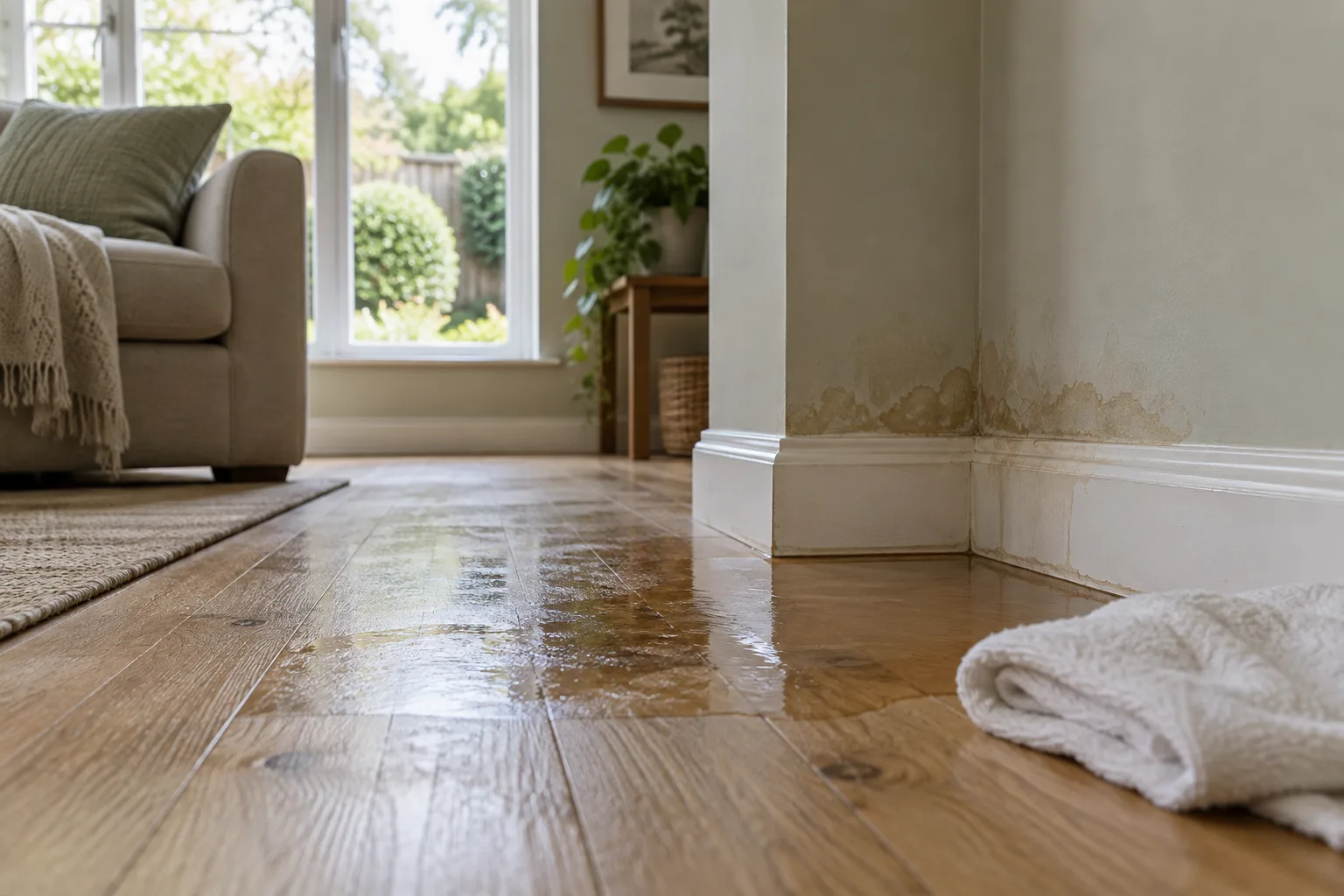
How much does flooded basement cleanup cost in North Fulton, GA?
For most North Fulton homes, flooded basement cleanup runs $1,300–$5,500 for water extraction plus $2,000–$6,000 for structural drying, as labeled estimates for the Atlanta market. If walls, flooring, or finished rooms need rebuilding, full restoration typically lands between $3,000 and $30,000+. Actual pricing depends on an on-site inspection.
A flooded basement is the most common emergency call in North Fulton, whether the water came from a failed sump pump in Sandy Springs, a burst supply line in Dunwoody, or a summer thunderstorm that overwhelmed the grading around a Roswell home. The bill almost always stacks three line items: water extraction to remove the standing water, drying to pull moisture out of the slab and framing, and rebuilding whatever finished surfaces could not be saved.
As labeled estimates for the Atlanta market, extraction typically runs $1,300–$5,500, structural drying adds $2,000–$6,000, and when drywall, flooring, and trim must be replaced, full restoration spans $3,000–$30,000+. A small Category 1 incident in an unfinished basement sits near the bottom of those ranges; a finished media room that sat under gray water for days lands near the top.
None of these figures is a quote. Actual pricing depends on an on-site inspection, and the inspection fees and written-estimate terms from the available contractor are confirmed directly. To see how basement floods compare with other loss types, our broader water damage restoration cost guide covers the full picture.
What factors drive the cost of basement flood cleanup?
Five things move the number most: the water category (clean, gray, or black), how deep the water got, whether the basement is finished or unfinished, how much furniture and stored contents got wet, and how long the water sat before cleanup started. Each factor pushes labor, equipment, and demolition up or down.
Professional restorers price a basement flood the way the IICRC S500 standard frames it: how contaminated is the water, how much material absorbed it, and how hard will it be to dry. A shallow clean-water spill across sealed concrete is a quick extraction and a few days of air movers. Two feet of storm water in a carpeted, furnished basement in Johns Creek is a different project entirely.
Time is its own multiplier. Water that sat for a weekend while you were out of town has had time to wick up drywall, swell baseboards, and migrate under flooring, which expands the demolition scope and pushes the job from straightforward dehumidification toward reconstruction.
- Water category: Category 1 clean water is the least costly; Category 2 gray and Category 3 black water add protective gear, antimicrobial treatment, and disposal steps.
- Depth and spread: a thin layer across part of the floor costs far less to handle than several inches covering the whole footprint.
- Finished vs unfinished: drywall, carpet, trim, insulation, and drop ceilings absorb water and often need removal and replacement.
- Contents: furniture, electronics, and stored boxes add pack-out, cleaning, or disposal labor.
- Dwell time: every day the basement stays wet raises the odds that mold remediation gets added to the scope.
How much more does a finished basement cost to clean up than an unfinished one?
Often two to three times more, because a finished basement adds drywall, insulation, carpet, trim, and contents that soak up water. An unfinished concrete basement may only need extraction and drying, while a finished one frequently moves into the full restoration range of $3,000–$30,000+ as an Atlanta-market estimate.
An unfinished basement in Alpharetta with a bare slab and exposed framing is the best-case scenario: an available contractor can extract the water, sets air movers and dehumidifiers, and verifies dryness with a moisture meter over several days. Costs often stay inside the extraction and drying estimate ranges with little or no demolition.
A finished basement changes the math. Wet drywall is typically cut out above the water line, soaked carpet and pad usually cannot be saved after gray water exposure, and built-ins, baseboards, and insulation come out with them. That demolition plus the rebuild is what moves a project into the full restoration range of $3,000–$30,000+ as a labeled estimate for metro Atlanta.
Terrace-level rec rooms and basement apartments, common in Sandy Springs and Roswell homes along the GA-400 corridor, often carry the highest rebuild costs because they are finished to the same standard as the main floor, right down to hardwood, cabinetry, and home theater equipment.
Does the water category change what flooded basement cleanup costs?
Yes, significantly. Category 1 clean water from a burst supply line is the cheapest to handle. Category 2 gray water adds antimicrobial treatment. Category 3 black water, like a sewage backup or rising storm water, requires full protective protocols, and sewage cleanup typically runs $2,000–$10,000 as a labeled Atlanta-market estimate.
Category 1 water comes from a sanitary source such as a burst pipe or a failed water heater. If it is extracted quickly, much of the structure can often be dried in place, which keeps the project near the bottom of the estimate ranges.
Category 2 gray water, from sources like washing machine discharge or a sump basin, carries contamination that calls for antimicrobial treatment of every affected surface. Category 3 black water, including sewage backups and rising storm water, demands containment, protective equipment, and disposal of porous materials, which is why sewage backup cleanup runs $2,000–$10,000 as a labeled estimate for the Atlanta market.
Category can also shift while you wait. Clean water standing in a basement degrades as it picks up contaminants from flooring, stored items, and the slab itself, so a delay can literally re-classify your loss into a more expensive cleanup protocol.
Will homeowners insurance pay for my flooded basement in Georgia?
Sometimes. Sudden and accidental water damage, like a burst pipe or failed water heater, is usually covered by a standard Georgia homeowners policy. Rising water from storms or the Chattahoochee River is typically excluded and needs separate NFIP flood coverage. This is general information, not insurance advice; your insurer decides coverage.
In Georgia, the dividing line is usually how the water arrived. Sudden and accidental discharges, like a supply line that burst while you were at work, are commonly covered perils on a standard homeowners policy. Gradual leaks that seeped for months are typically denied, and rising surface water, the classic flooded basement after a storm, falls under the flood exclusion on most policies.
Flood coverage is sold separately through the NFIP, and sewer or sump pump backups are often covered only if the policy includes a water backup endorsement. Your adjuster will want claim documentation: photos of the high-water line, a list of damaged contents, and a contractor's moisture mapping and drying logs all support a proof of loss.
This page is general information, not legal or insurance advice. Coverage decisions always belong to your insurer and the specific language of your policy, so report the loss promptly and ask your agent what applies.
Why does waiting make a flooded basement more expensive to fix?
Because water keeps doing damage by the hour. It wicks up drywall, soaks subfloors and framing, and mold can begin developing within 24 to 48 hours, adding $1,500–$6,000 in estimated remediation costs. Standing water can also degrade from clean to gray water over time, raising the required cleanup protocol.
Mold can begin developing within 24 to 48 hours of water exposure, and Georgia's humid subtropical climate gives it ideal conditions, especially in a below-grade basement with limited airflow. Once growth starts, the scope expands from drying to remediation under the IICRC S520 standard, with containment, HEPA filtration, and negative air pressure, adding an estimated $1,500–$6,000 to the project.
Fast action also saves materials that would otherwise be lost. Drywall that is extracted and dried within the first day may only need the bottom section replaced; the same wall after a week of sitting wet is usually a full tear-out. Subfloor, framing, and stored contents follow the same curve, and so does the final bill.
The cheapest basement flood is the one you prevent or catch early. A working sump pump with battery backup, a backwater valve on the sewer line, and the maintenance steps in our Atlanta basement flood prevention guide all shrink both the odds and the size of the next loss.
How do I get an exact price for my flooded basement cleanup?
Call (678) 944-8612 to request a referral. If a contractor accepts an introduction, that contractor decides whether to offer an on-site assessment, what it includes, and any fee; confirm scope and written-estimate terms directly. We do not perform restoration or dispatch crews.
North Fulton Water Damage Pros is a disclosed referral service operated by Stratum Relay LLC. We do not restore buildings or dispatch crews. You can request an introduction concerning a property in Sandy Springs, Roswell, Dunwoody, Alpharetta, Johns Creek or Brookhaven without a fee from us. An assessment, if offered, can help a contractor determine scope and pricing; confirm that contractor's coverage, assessment fee and written-estimate terms directly.
If a contractor offers an assessment, ask whether it includes moisture readings, imaging, water-category information, or a line-item estimate, and confirm any contractor-set fee directly. There is no fee to request a referral; that request is separate from any assessment fee, and there is no obligation to proceed.
If water is actively spreading or there is sewage, electrical or structural danger, stay clear and contact an available restoration provider, utility or emergency services as appropriate. Do not wait for this referral form: it does not dispatch a crew or guarantee a response.
Frequently asked questions
How long does it take to dry out a flooded basement?
Extraction usually takes a few hours, but structural drying typically runs three to five days depending on the evaporation class and the materials involved. A contractor may verify progress with daily moisture meter readings rather than guessing, and dense materials like slab concrete and subfloor take the longest to release moisture.
Is it cheaper to clean up a flooded basement myself?
For an inch of clean water on bare concrete, possibly. For anything deeper, for gray or black water, or for a finished basement, DIY usually costs more in the end because consumer wet vacs and box fans leave moisture inside walls and subfloors, which leads to mold and a larger professional job later.
Does the cause of the flood change what I pay out of pocket?
Often, through insurance rather than the cleanup bill itself. A burst pipe is commonly covered as sudden and accidental damage, a sump pump or sewer backup may require a separate water backup endorsement, and storm flooding usually requires NFIP flood coverage. Without applicable coverage, the full estimate is out of pocket.
What does the inspection actually include?
An assessment may include moisture readings, imaging, water-category information, or an estimate, but contents vary by contractor. Confirm what is included and any contractor-set fee directly. North Fulton Water Damage Pros never bills you for requesting a referral.
Will every flooded basement need mold remediation?
No. If extraction and drying start within the first day or two, most basements never develop a mold problem. Remediation generally enters the scope when water sat for days, when materials stayed damp inside wall cavities, or when a musty odor or visible growth shows up after the cleanup.
Should I throw out carpet and drywall after a basement flood?
Decisions depend on contamination, exposure, materials and condition, not just the water's appearance. Avoid contact with potentially contaminated materials and ask a qualified provider to explain proposed removal or drying. Confirm assessment scope and fees; a visit does not guarantee an exact removal plan.